


Run every job and every subcontractor in one place
For fit-out and renovation builders. Quote by zone, see which trades are free, send work orders and keep proof from site, from first enquiry to handover.
Sound familiar?
"Who's free next Tuesday?"
Trades are booked by phone and text. You find the clash when two crews turn up, or when nobody does.
"I thought that was included."
The client asked for a change on site. It was agreed in a conversation, and now the price and the scope don't match.
"Was that actually done?"
Photos sit in someone's camera roll, insurance certificates sit in an inbox, and the proof takes an afternoon to find.
One job in OpSpot, start to finish
Here's how an example job runs: a six-week office fit-out, with more than a dozen trades between strip-out and handover.
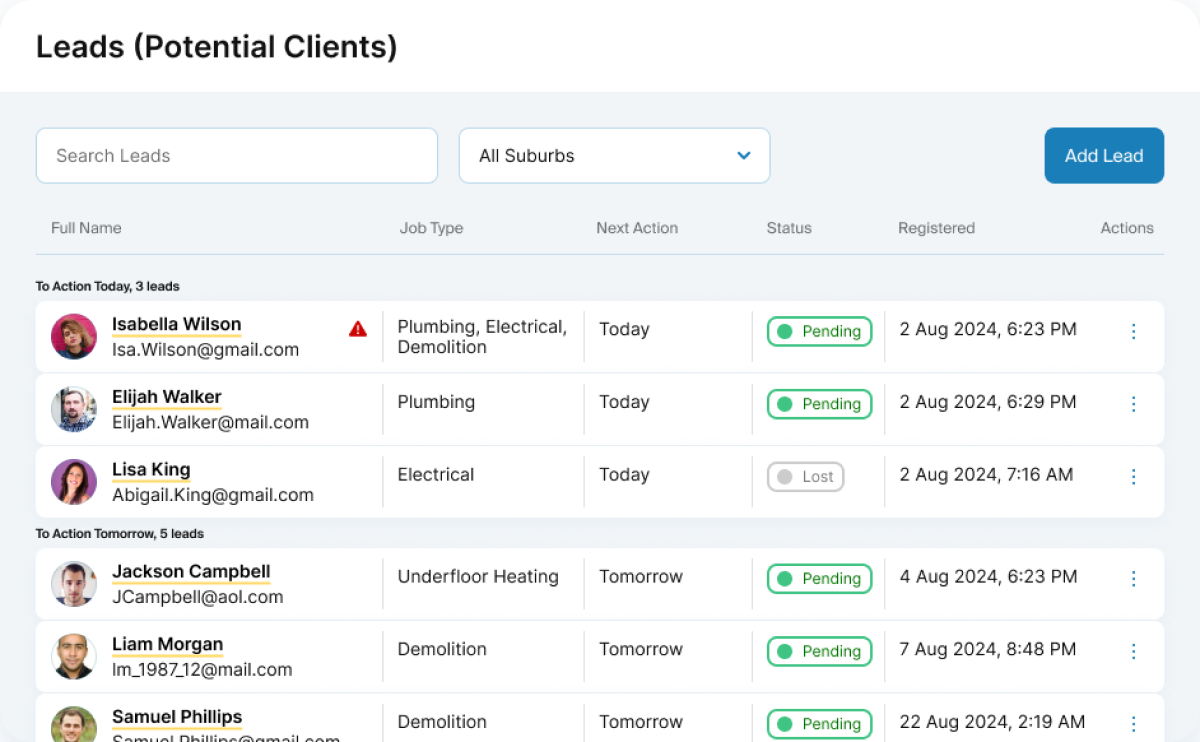
1. The enquiry comes in
The tenant's project manager calls about their office. It goes straight on a lead sheet, and when you win it, that lead becomes the job with nothing retyped.
- Client contacts, site address, budget and documents on one record
- Follow-up actions with due dates and reminder emails
- Your own stages and statuses, from enquiry to handover
2. Price it, then price the changes
Split the scope into zones such as reception, open plan and kitchenette, and build it from your own price list. When the client adds a glass partition, generate the next quote and compare the two.
- Quantity, cost and margin on every line
- Numbered quotes on your own template: Q-001, Q-002
- A variation PDF showing what was added, removed or changed, zone by zone
3. Lay out the programme
Book each trade in sequence and see the whole job on the Planner. Filter by project, project manager, job type or attendee, and keep the client in the loop without another phone call.
- Gantt view across the whole job, with PDF export
- A read-only link for the client, with an optional expiry date
- Different people on each day of a multi-day booking
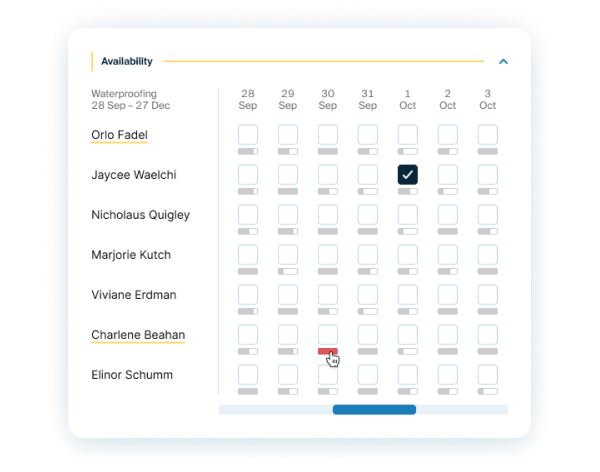
4. Book the trades and send the work orders
Need an electrician for the rough-in? Choose the job type and see every staff member and subcontractor who does that work, four weeks out, with a load bar for each day.
- Work orders built from your quoted labour lines, at cost, never your sell price
- Required licences and insurance set per job type, with expiry reminders
- Automatic booking reminders by email
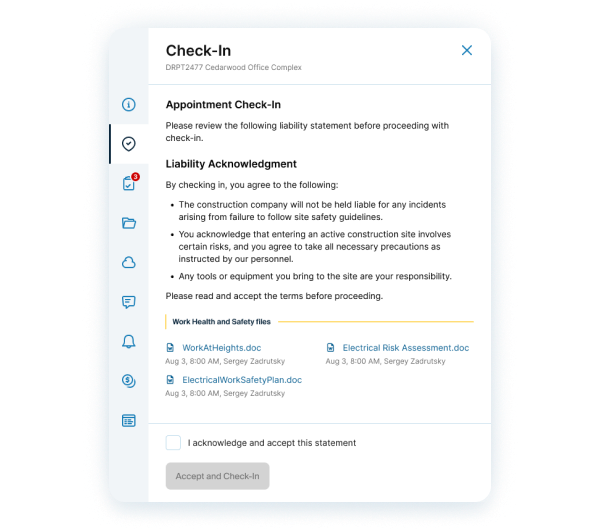
5. Know who's on site
Put the project QR code up at the site gate. Your people and your subcontractors check in as themselves, and visitors check in as guests with no app or account.
- Site instructions each worker accepts when checking in to a booking
- Time recorded for everyone, and GPS for your crews and subcontractors if you turn it on
- Check-in history for the project, newest first
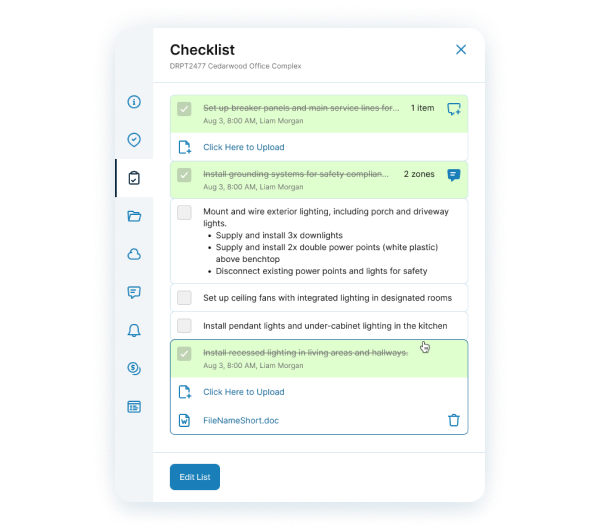
6. Keep the proof and track the money
Checklist items can require a photo or file before they can be ticked, so proof is on the job, not in a camera roll. Once the work is done, approve what you owe each subcontractor line by line.
- Every item records who completed it and when
- Subcontractor payments: pending, approved, rejected and paid
- Client progress payments tracked by stage: expected, invoice sent and paid
What builders use most, and how it works

See who's free before you book
Check staff and subcontractors by trade, four weeks ahead. If another OpSpot company has booked a subcontractor, you see that they're busy, with no details.
Read the guide
Work orders and subcontractor payments
Send work orders at cost, then approve completed lines one at a time, so you know what you owe each subcontractor on each job.
Read the guide
Licences and insurance
Set what each job type requires and get a reminder before documents expire. NSW licences are checked against the Fair Trading register every week.
Read the guide
Scope, quotes and variations
Build the scope by zone from your own price list, keep every quote version, and mark the final one with the signed document attached.
Read the guide
Checklists, photo proof and QR check-ins
Require a photo before an item can be ticked, get notified when the last item is done, and see everyone who has checked in on the project.
Read the guide
The right files for the right people
Share plans with subcontractors on their bookings, and keep contracts and pricing in Sensitive files that never reach other companies.
Read the guideSee it working
Short walkthroughs of the real product.
The Planner
See your jobs and trades on a Gantt chart.
The Calendar
Run the week and move bookings as things change.
Templates and guides for your next job
Questions builders ask
Can subcontractors see my margins?
No. Work orders show subcontractors the cost of their work, never your sell price or margin. They only see Shareable files, on bookings they're assigned to.
How do subcontractors join?
Invite them by ABN, manager email or OpSpot ID. Each subcontractor is their own company in OpSpot, with their own team. They accept your invitation and choose which of their people you can see.
How does OpSpot handle licences and insurance?
You choose which job types need a licence or insurance. OpSpot keeps the documents and dates for each person and emails a reminder before they expire, 15 days before by default. NSW licences are also checked against the NSW Fair Trading register when saved and every week.
Can visitors sign in without an account?
Yes. Visitors scan the project QR code and check in as a guest with their name and mobile. Staff and subcontractors check in as themselves.
Does it work on a phone?
Yes. OpSpot runs in the browser and installs to your phone's home screen, with a calendar layout built for phones and push notifications.
